
Dreams: Are They Messages from the Unconscious or Just Brain Noise?
Dreams can be approached without pretending we know exactly what they “really are.” Even if you’re skeptical that dreams contain mystical messages, a Jungian approach treats them as psychologically useful material: symbolic self-reflection that can reveal conflicts, desires, and blind spots you might not access as easily while awake.
You wake up with a vivid image still clinging to you: a house with endless rooms, a faceless stranger, a wave about to break. For a few seconds it feels important—like it’s trying to tell you something you somehow already know. Then the day rushes in. Emails. Coffee. News. And the dream becomes either a private riddle or a random glitch you’re slightly embarrassed you cared about. Was it a message from somewhere deep inside you, or just your brain firing off leftovers from yesterday?
THESIS
Dreams can be approached without pretending we know exactly what they “really are.” Even if you’re skeptical that dreams contain mystical messages, a Jungian approach treats them as psychologically useful material: symbolic self-reflection that can reveal conflicts, desires, and blind spots you might not access as easily while awake. You don’t need certainty about dream origins to get value from dreamwork—you only need curiosity, honesty, and a willingness to experiment.
THE SKEPTICAL VIEW: WHY “IT’S JUST BRAIN NOISE” ISN’T CRAZY
Let’s give skepticism its due. There are strong reasons to doubt that dreams come prepackaged with meaning. Dreams borrow from recent experiences. They splice together fragments. They’re often incoherent. They can be influenced by stress, sleep quality, substances, and even room temperature. If you’ve ever dreamed about a weird mashup of your high school hallway, a celebrity you barely care about, and a pet that talks in riddles, the “randomness” argument feels pretty compelling.
And there’s another reasonable concern: humans are meaning-making machines. We see faces in clouds and patterns in static. If you go hunting for symbolism, you will find it—whether it’s there or not. Dream interpretation can become a kind of psychological horoscope, where anything can mean anything, and you end up confirming whatever you already believe.
A Jungian beginner’s approach doesn’t have to fight these points. In fact, it can start there. Maybe dreams are partly noise. Maybe they’re partly memory consolidation. Maybe they’re partly emotional processing. Jung’s value isn’t that he “proved” dreams are messages from the unconscious in a laboratory sense. The value is that he offered a disciplined way to treat dream images as symbols worth engaging—without requiring you to swear allegiance to a single explanation.
A JUNGIAN REFRAME: DREAMS AS SYMBOLIC FEEDBACK, NOT FORTUNE-TELLING
In Jungian psychology, dreams are often treated as communications from the unconscious—yet that phrase can sound more supernatural than it needs to. Think of “unconscious” here as the parts of you that operate outside your everyday self-image: impulses you disown, emotions you rationalize away, potentials you haven’t developed, and fears you keep busy to avoid.
Jung’s key move is to treat dream images as symbolic rather than literal. A dream is not usually saying, “This will happen.” It’s more like it’s saying, “This is happening in you.” That shift matters. It turns dreamwork into a kind of inner feedback system.
Even if you believe dreams are generated by a brain doing nightly housekeeping, you can still ask: Why did my mind choose these images to represent my current state? Why did that particular feeling show up? Why did I wake up with shame, relief, dread, or longing? The dream becomes less a prophecy and more a mirror—distorted, yes, but potentially revealing.
THE TRAP OF “DREAM DICTIONARIES” (AND WHAT TO DO INSTEAD)
One of the quickest ways dreamwork becomes flimsy is when symbols are treated as universal codes. “A snake always means X.” “Water always means Y.” Jung did notice recurring motifs across cultures, but he also emphasized the personal context of the dreamer. A symbol is alive; it has a history in your psyche.
Here’s a simple example. Suppose you dream of a dog.
For one person, a dog might represent loyalty, warmth, and protection because they grew up with a beloved pet. For another, a dog might represent threat and unpredictability because they were bitten as a child. For someone else, a dog might symbolize responsibility they feel they can’t handle. The “same” symbol can point in different directions depending on the dreamer’s associations.
A more grounded approach is to ask: What does this image mean to me, emotionally and historically? What memories does it touch? What does it remind me of? What do I feel toward it—attraction, disgust, fear, tenderness?
A BEGINNER METHOD: THREE QUESTIONS THAT KEEP YOU HONEST
You don’t need a mystical framework to do this. You need a method that resists self-deception.
First: What happened in the dream, as if it were a short film?
Retell it simply. No interpretation yet. Just the sequence and the mood.
Second: What did I feel during the dream and upon waking?
Emotions are often the most reliable clue. Dreams can lie in plot but tell the truth in feeling.
Third: Where is this dynamic in my waking life?
Not the literal events, but the pattern. Is there pursuit, avoidance, seduction, exposure, collapse, rescue, judgment, competition, hiding, or transformation?
These questions keep dreamwork tethered to lived reality. They also prevent the common mistake of using dreams to escape your life rather than understand it.
Jungian Psyche AI
You’ve identified the pattern. Now understand where it comes from.
Jungian Psyche AI helps you explore the underlying structures shaping your thoughts, emotions, and behavior—through guided journaling, dream interpretation, and archetypal analysis grounded in Jungian psychology.
Available on iOS and web
https://apps.apple.com/app/jungian-psyche-ai/id6754344607
https://www.jungianpsyche.com/app
SHORT ANECDOTE: THE “MISSING ROOM” DREAM
A common dream theme is discovering a hidden room in your house. Imagine someone dreams they’re walking through their home and finds a door that wasn’t there before. Behind it is a bright room they’ve never seen—maybe full of art supplies, maybe full of old boxes, maybe empty but full of light. They wake up with a strange mix of excitement and sadness.
A skeptic could say: the brain is recombining spatial memories and novelty signals. Fine. But psychologically, it’s still a potent image. If the dreamer is someone who has been living narrowly—work, obligations, routine—the “new room” can function as a symbol of unused potential. It might point to creativity they’ve neglected, or a part of life they’ve kept locked away.
Now the grounded question: What is the “room” in waking life? Maybe it’s the desire to paint again. Maybe it’s the wish to explore a different career path. Maybe it’s a capacity for play, intimacy, or rest. The dream doesn’t prove what to do. It invites a conversation: What have I not been letting myself enter?
SHADOW WORK IN DREAMS: WHEN THE DREAM MAKES YOU LOOK BAD
Jungian dreamwork becomes most “controversial” when it suggests you are not as nice, brave, rational, or innocent as you prefer to believe. Dreams often feature figures who embarrass you: the liar, the cheater, the coward, the bully, the needy child, the seducer, the thief. The temptation is to interpret these characters as “other people” or to dismiss the dream as meaningless because it feels unfair.
Shadow work asks a sharper question: If this figure were a part of me, what would it be protecting? What would it want? What would it fear?
This is not about self-blame. It’s about reclaiming disowned energy. For example, someone who prides themselves on being endlessly agreeable might dream of screaming at a friend in public. The dream could be showing a shadow of anger—not because they’re secretly a monster, but because their psyche is trying to restore balance. Anger, integrated, can become boundary-setting. Unintegrated, it leaks out as passive aggression, resentment, or exhaustion.
Dreams can be rude like that. They don’t always flatter your conscious identity. That’s part of their usefulness.
ANOTHER EXAMPLE: THE CHASING DREAM THAT WON’T GO AWAY
Recurring dreams often show a repeating psychological pattern. Consider the classic: being chased. You’re running through corridors, streets, woods. Something is behind you. Sometimes you never see it. Sometimes you wake up right before it catches you.
A simplistic interpretation is “you’re stressed.” True but thin. A Jungian approach asks: What are you fleeing? What does the pursuer want? What happens if you stop?
One person might realize they’re fleeing grief they haven’t allowed themselves to feel. Another might be fleeing ambition—odd as that sounds—because success would force them to outgrow an old identity. Another might be fleeing conflict, truth-telling, or a decision. The dream doesn’t convict you; it highlights a pattern.
A grounded experiment would be to change one waking behavior: have one avoided conversation, take one step toward the delayed task, allow one honest feeling. Then observe whether the dream shifts. You’re not proving a theory. You’re testing whether inner images correlate with inner change.
HOW TO STAY GROUNDED: DREAMWORK WITHOUT CERTAINTY
If you want to keep dreamwork practical and avoid turning it into superstition, try holding interpretations lightly. Treat them as hypotheses, not verdicts. Ask: Does this interpretation increase my clarity, responsibility, and compassion? Or does it inflate me, scare me, or let me off the hook?
Also, beware of using dreams to outsource decisions. “I dreamed it, so I must do it” can become a way of dodging accountability. Jungian work is better when it deepens your relationship with choice rather than replaces it.
Finally, remember that some dreams might be mostly noise. You don’t have to force meaning out of every fragment. The practice is less about decoding every symbol and more about building an honest relationship with your inner life.
CONCLUDING TAKEAWAY: THE DREAM AS A MIRROR YOU CAN ARGUE WITH
So—messages from the unconscious or brain noise? The most useful answer for a beginner might be: maybe both, and you don’t have to settle it. You can be skeptical about grand claims and still treat dreams as valuable symbolic mirrors. You can disagree with a dream, question it, test it against your life, and still learn from the argument.
Dreamwork, done this way, isn’t about certainty. It’s about contact: contact with feelings you skip over, needs you minimize, and parts of you that don’t get a voice during the day. If you approach dreams with humility and a bit of rigor, they can become one of the simplest ways to begin shadow work—one image at a time.
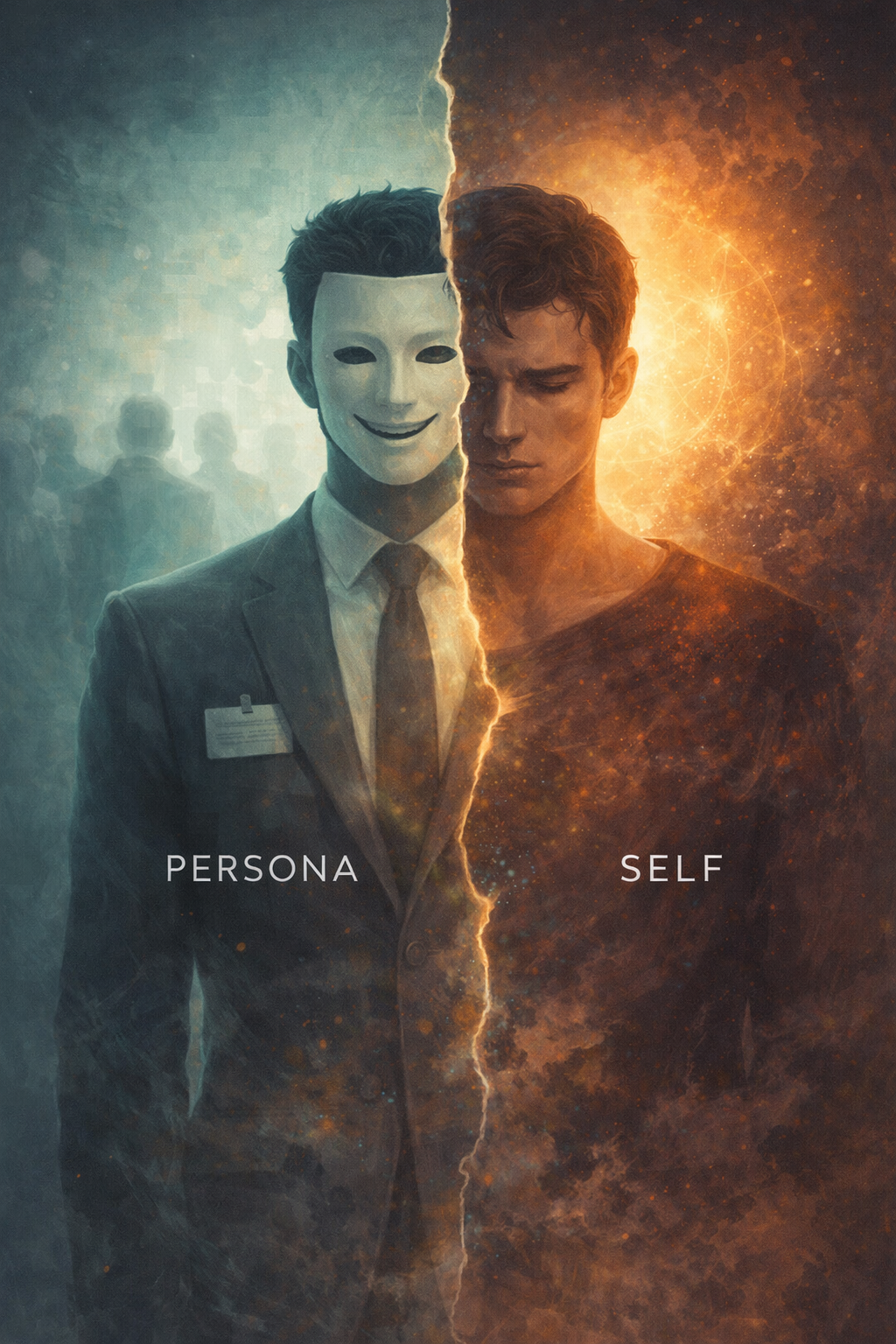
THE PERSONA VS THE SELF: WHY YOU FEEL FAKE (AND HOW JUNG EXPLAINS IT)
You can be doing everything “right” and still feel like a fraud. The meeting goes well, you say the correct things, people laugh at your jokes, you hit the milestones you’re supposed to hit—and then, when you’re alone, a strange hollowness creeps in. It’s not exactly sadness. It’s more like a quiet suspicion: If they really knew me, would they still approve? Or worse: Do I even know me? Read More
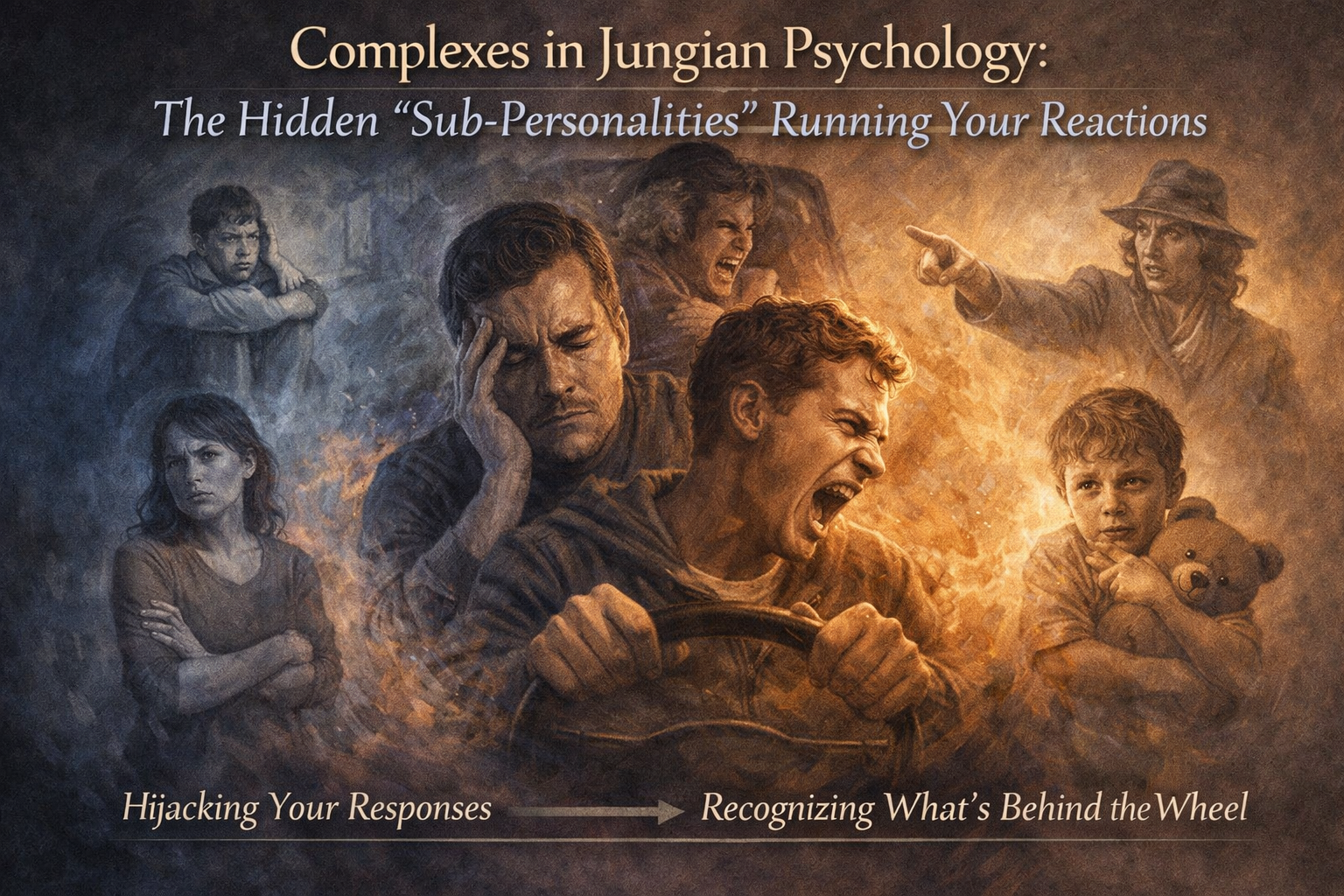
Complexes in Jungian Psychology: The Hidden “Sub-Personalities” Running Your Reactions
You can be calm, articulate, and self-aware all day long—until a single comment, glance, or tone of voice hits a nerve. Suddenly your body floods with heat, your mind narrows, and you’re saying things you didn’t plan to say. Later, you replay the moment and think, “Why did I react like that? I’m smarter than this.” Jungian psychology offers a surprisingly compassionate answer: you weren’t “being irrational” so much as being temporarily taken over by a complex. Read More
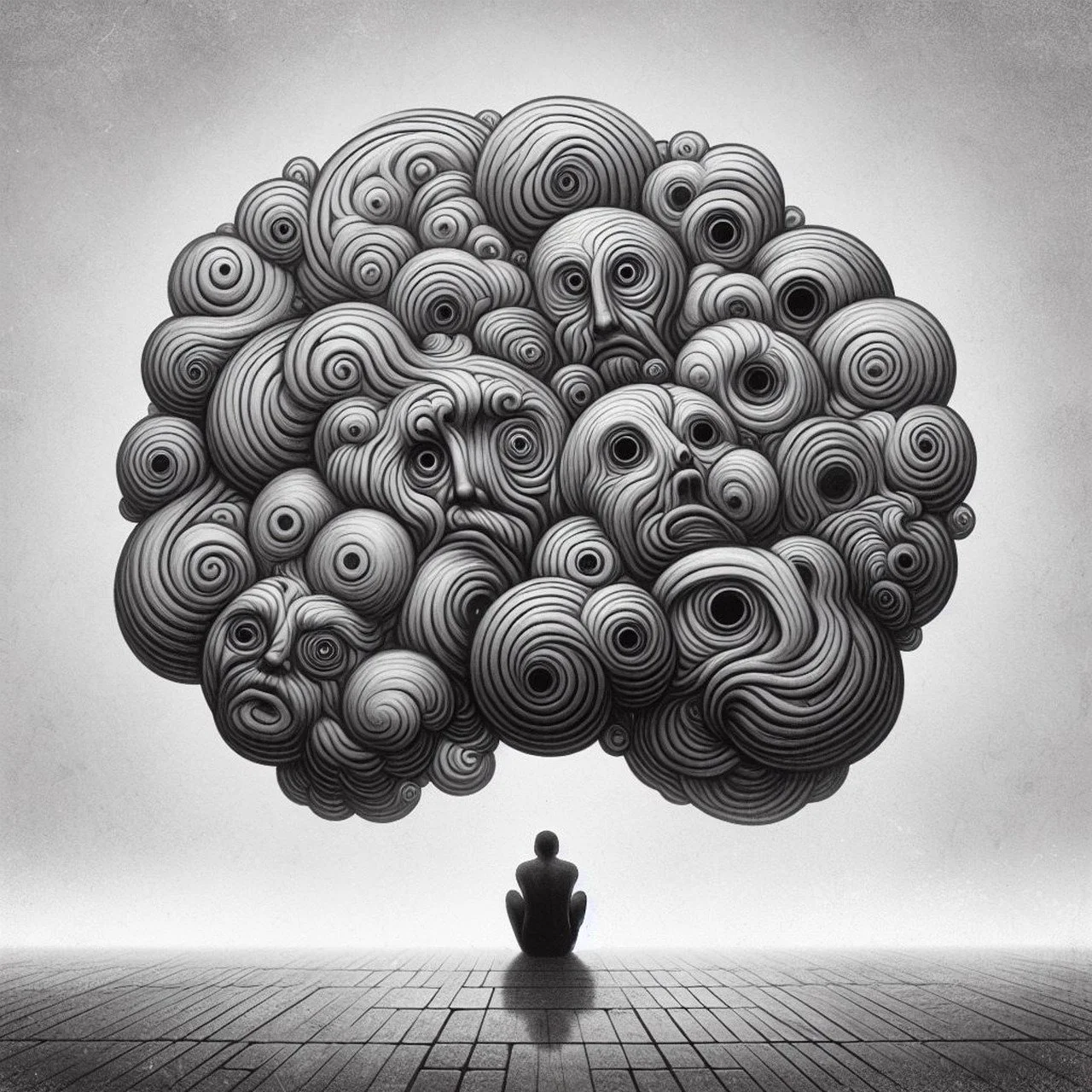
Shadow Work, Archetypes, and Individuation: How to Apply Carl Jung’s Psychology in Real Life
Learn shadow work, archetypes, and Jungian individuation with practical steps, prompts, and AI tools for deep psychological self-discovery.
Why Carl Jung’s Psychology Is Trending Again
If you’ve recently searched:
“shadow work journal prompts”
“what is the shadow self”
“Jung dream interpretation”
—you’re not alone.
Interest in Jungian psychology has surged as people look for deeper self-understanding beyond surface-level self-help. Carl Jung’s model of the psyche offers a structured way to explore the unconscious and integrate hidden parts of yourself.
At the center of Jung’s work are three powerful ideas:
The Shadow
Archetypes
Individuation
Together, they form one of the most practical frameworks for psychological growth available today.
What Is the Shadow Self? (And Why People Search for It)
In Jungian psychology, the shadow represents the parts of ourselves we reject or repress — traits we consider unacceptable or uncomfortable.
This often includes:
suppressed anger
envy or jealousy
hidden desires
disowned talents
Shadow work is the process of bringing these unconscious elements into awareness so they can be integrated rather than projected onto others.
Signs Your Shadow Is Active
Many people find this article after Googling things like:
“why do I get triggered so easily”
“why do I sabotage myself”
“shadow work for beginners”
Common shadow indicators:
recurring emotional triggers
intense reactions to certain people
patterns of self-sabotage
feeling “split” inside
How to Do Shadow Work (Beginner Method)
If you searched “how to start shadow work,” start here.
Step 1: Track Emotional Reactions
Jungian practice begins with observation.
Ask yourself:
When did I overreact today?
What trait in others bothers me most?
Where might this live in me?
Jung believed projections often reveal shadow material.
Step 2: Use Structured Shadow Work Prompts
High-intent search phrase: shadow work journal prompts
Try these:
What traits in others secretly irritate me?
When do I feel most ashamed of myself?
What parts of me do I hide from the world?
When do I feel strangely defensive?
Consistency matters more than intensity.
Step 3: Integrate — Don’t Eliminate
A key Jung insight:
The goal is not to destroy the shadow — but to integrate it.
Healthy shadow integration often leads to:
increased creativity
more authentic relationships
stronger emotional regulation
greater personal energy
Understanding Jungian Archetypes (Why They Matter)
Another major search driver is:
“Jung archetypes explained”
Jung proposed that humans share universal psychological patterns called archetypes, rooted in the collective unconscious.
The four core archetypes are:
Persona — the social mask
Shadow — the rejected self
Anima/Animus — inner feminine/masculine
Self — the integrated whole
These patterns influence behavior, relationships, and identity formation.
The Individuation Process (Jung’s Ultimate Goal)
High-value search term: “individuation Jung meaning”
Individuation is Jung’s term for becoming psychologically whole — integrating conscious and unconscious aspects of the personality.
The process typically unfolds as:
Persona awareness
Shadow confrontation
Anima/Animus integration
Emergence of the Self
Jung believed psychological conflict often arises when unconscious material remains unintegrated.
Dream Interpretation in Jungian Psychology
Another massive search cluster:
Jung dream meaning
dream symbols Jung
dream analysis psychology
Jung viewed dreams as messages from the unconscious, often expressed through symbolic imagery.
Unlike generic dream dictionaries, Jungian analysis asks:
What part of me does this symbol represent?
What is the psyche trying to balance?
What archetypal pattern is appearing?
Why AI Tools Are Changing Jungian Self-Discovery
Traditional Jungian analysis required:
years of therapy
expensive analysts
complex symbolic work
Today, structured AI tools can help people:
track shadow patterns
analyze dreams
explore archetypal themes
journal consistently
This dramatically lowers the barrier to entry for depth psychology work.
Start Your Own Jungian Exploration
If you’ve been searching for:
shadow work journal
Jungian dream analysis
archetype personality test
individuation guidance
…the key is consistent structured reflection.
Modern tools can help you:
uncover hidden patterns
track psychological growth
deepen self-awareness
explore your unconscious safely
Final Thoughts
Carl Jung’s psychology is experiencing a resurgence because it addresses something many modern approaches miss:
the deep symbolic life of the psyche.
Whether you begin with shadow work, dream analysis, or archetypes, the path of individuation starts with one simple move:
Turning inward with curiosity instead of judgment.